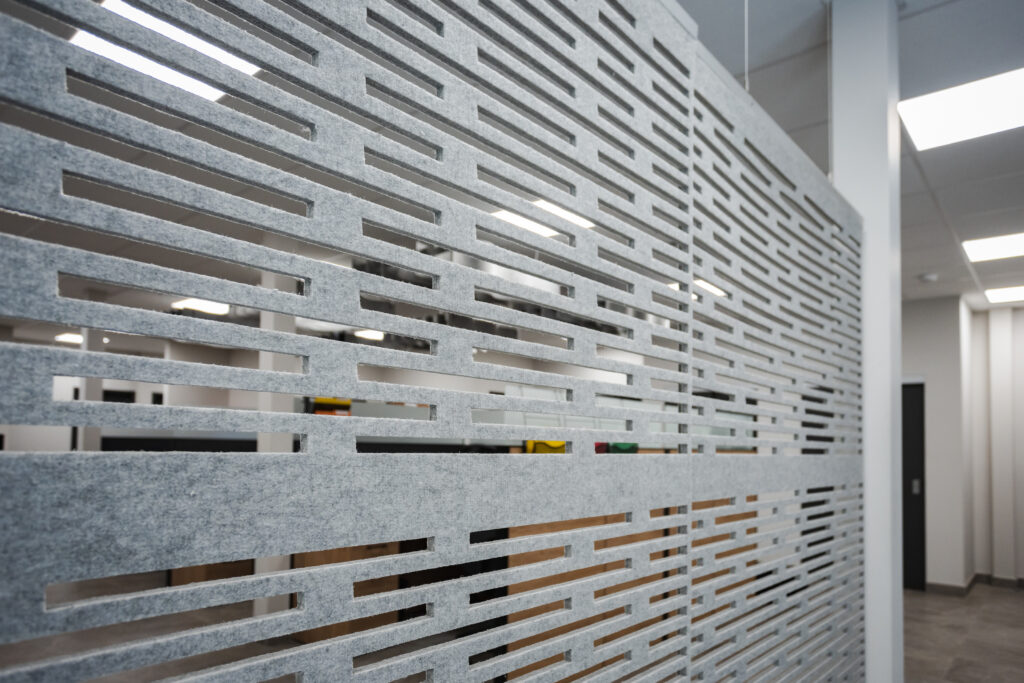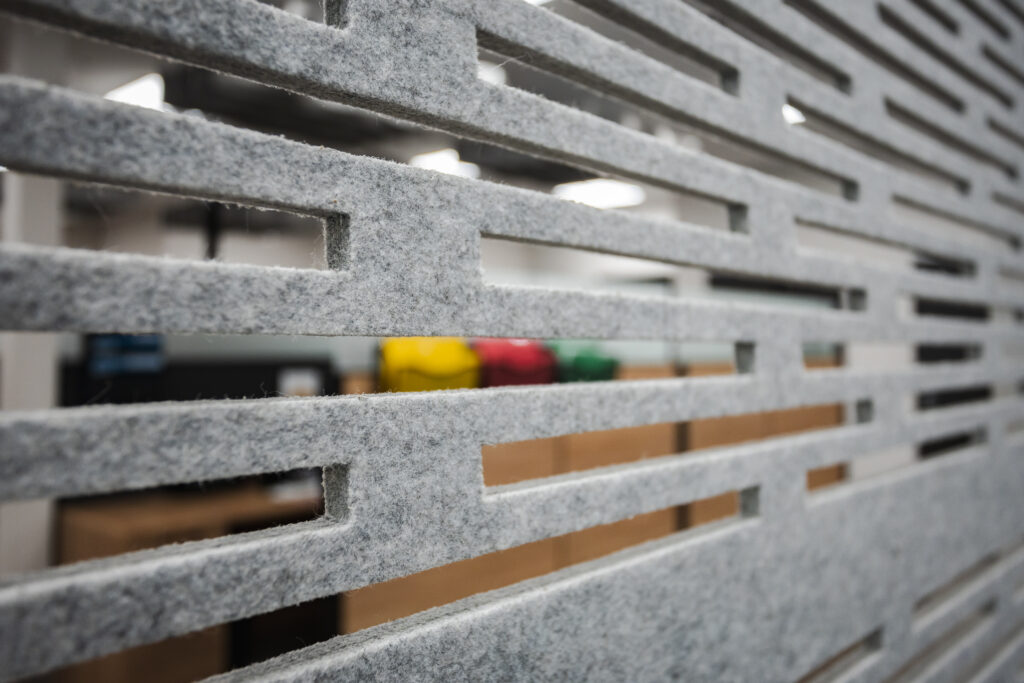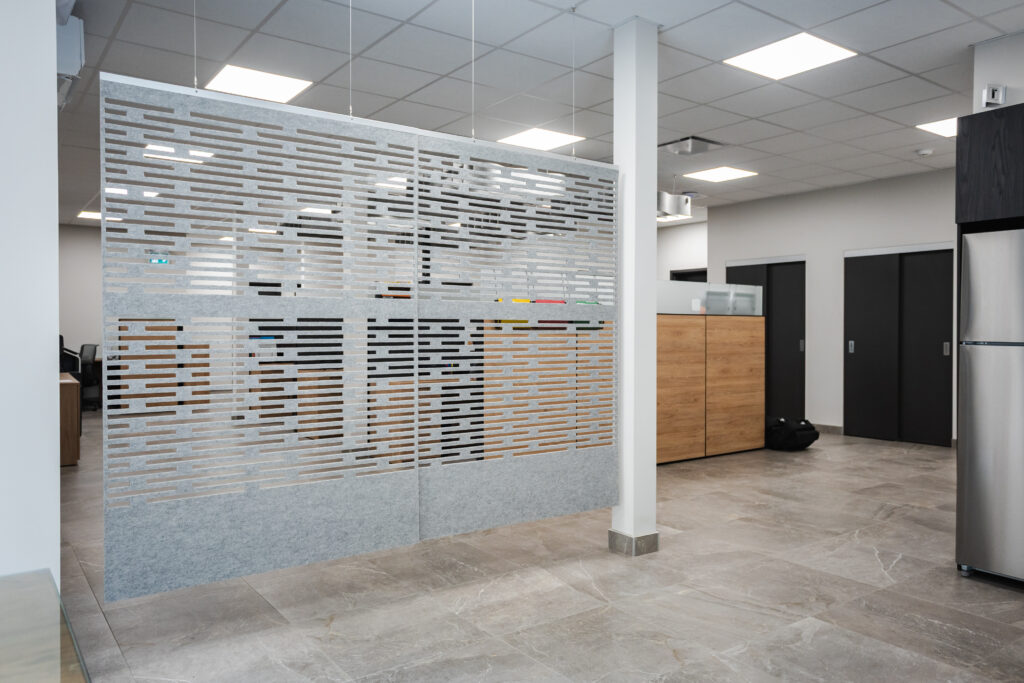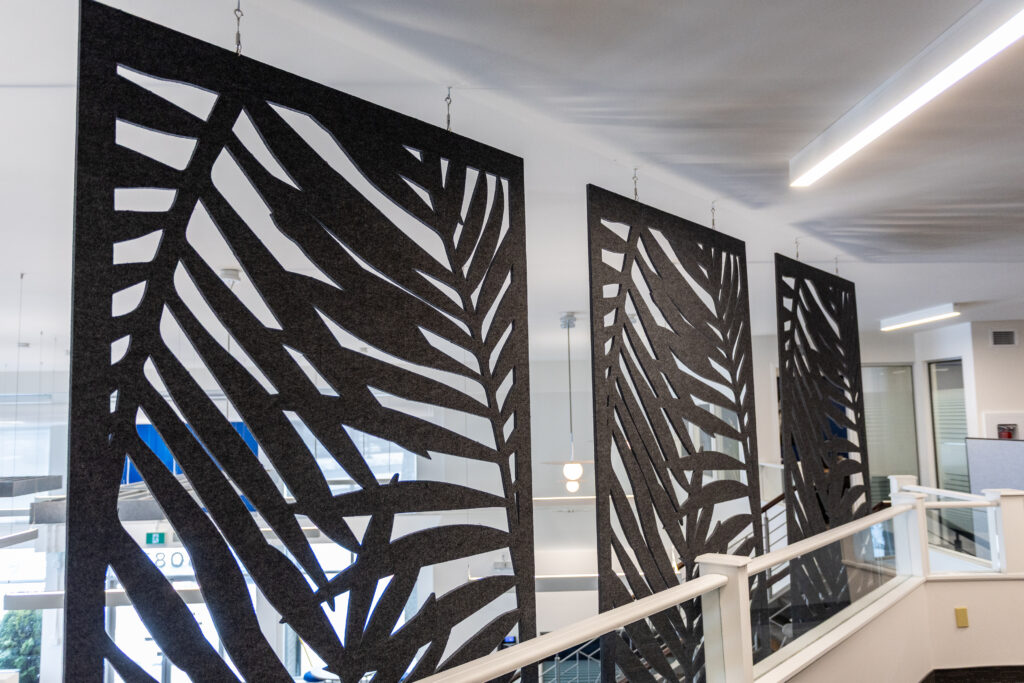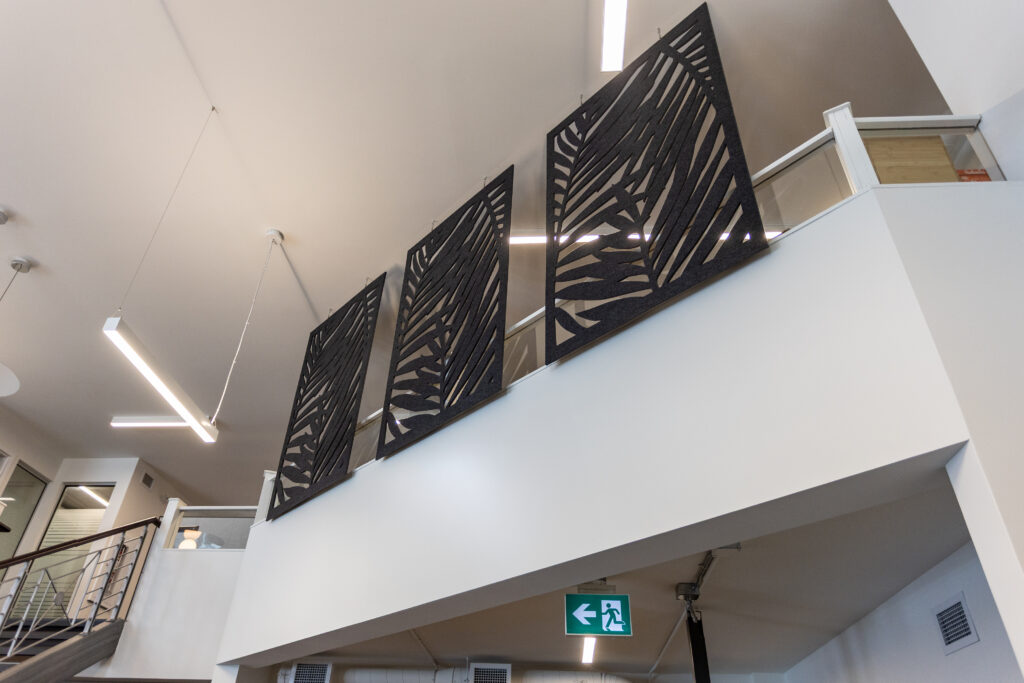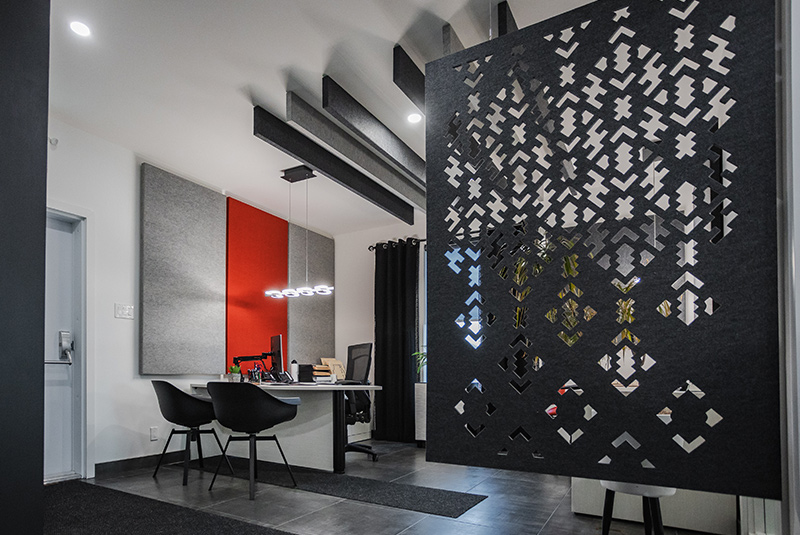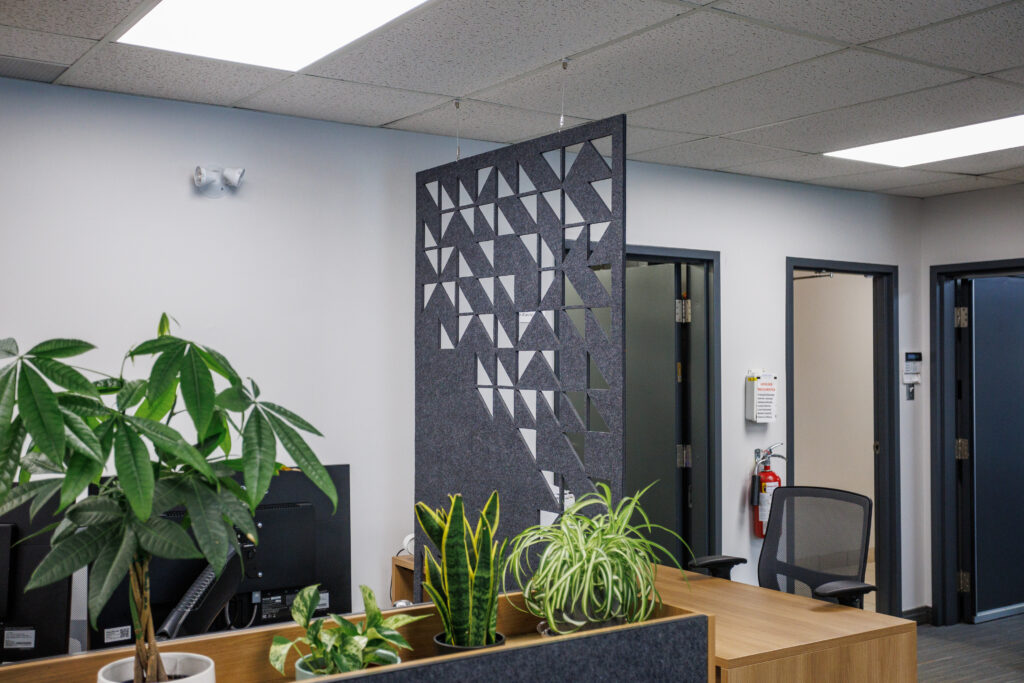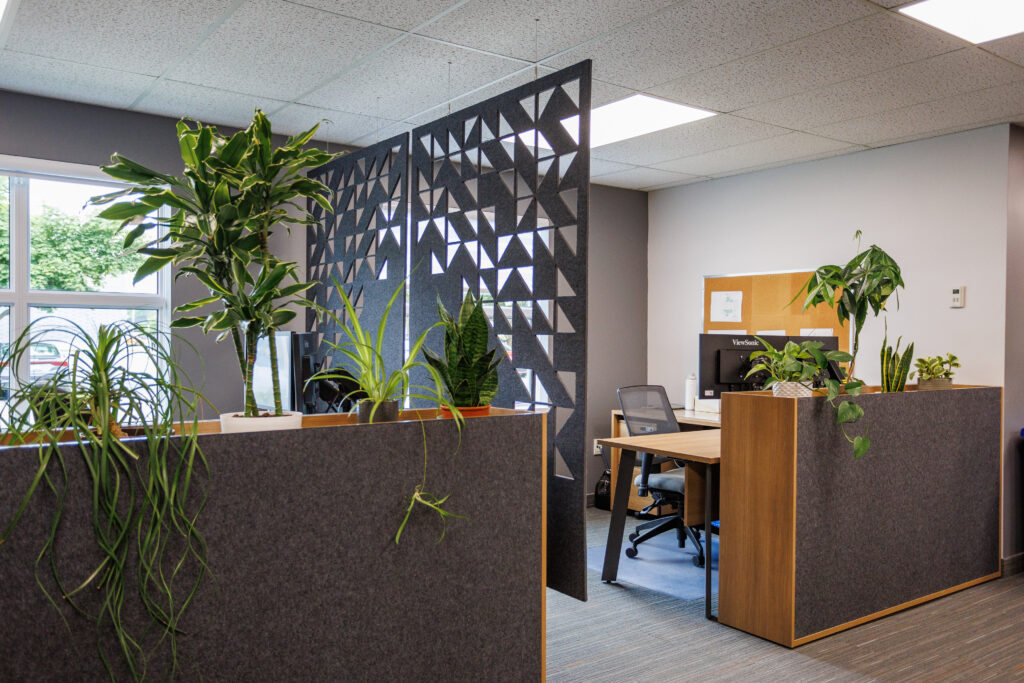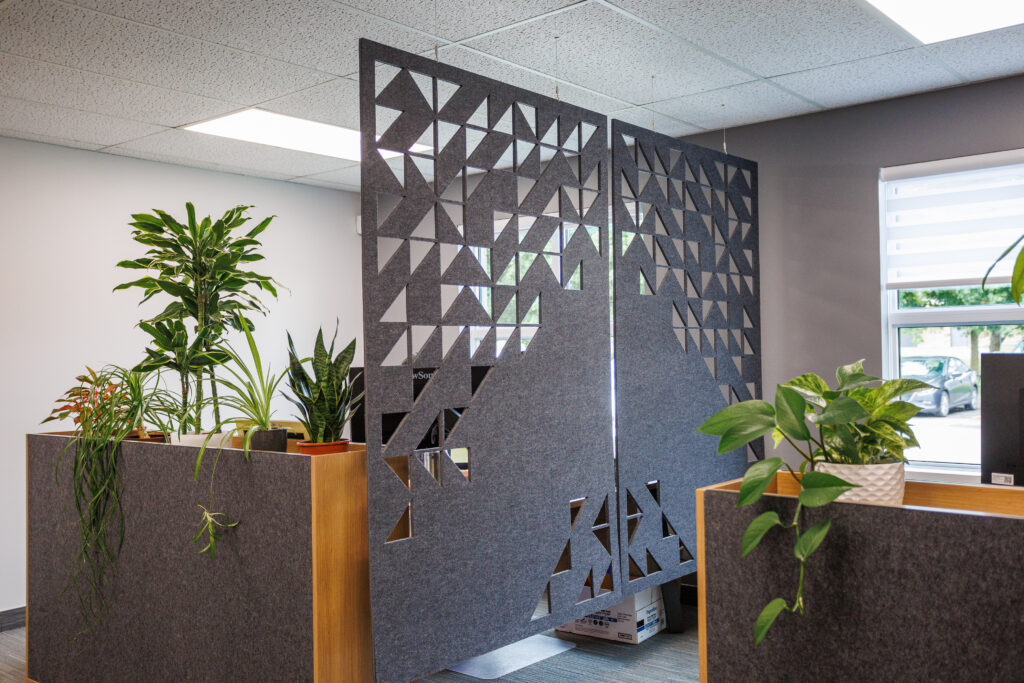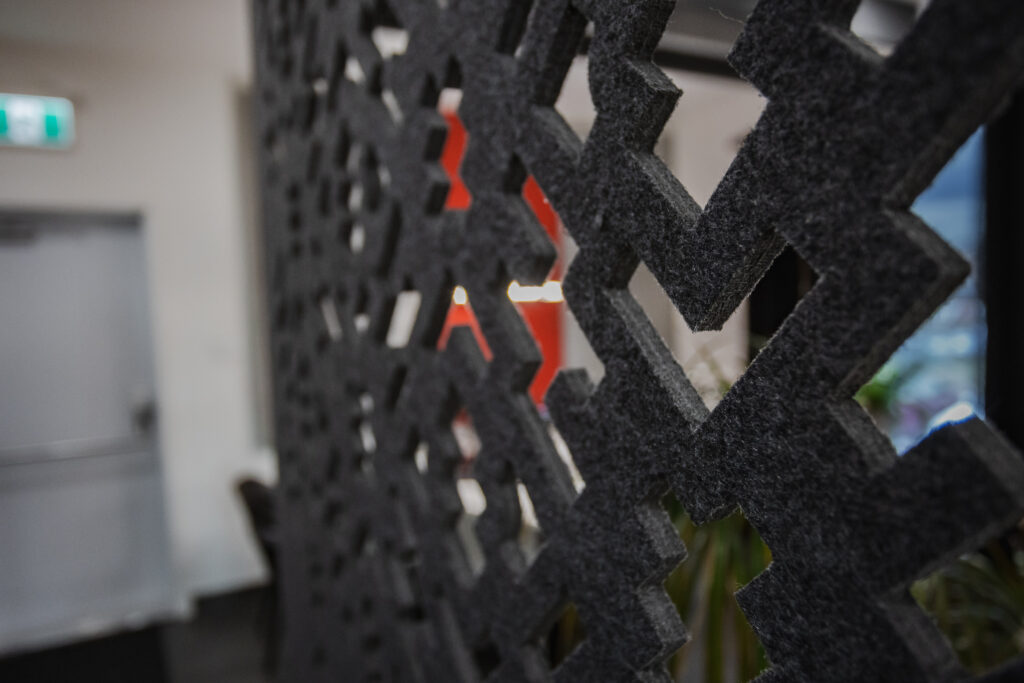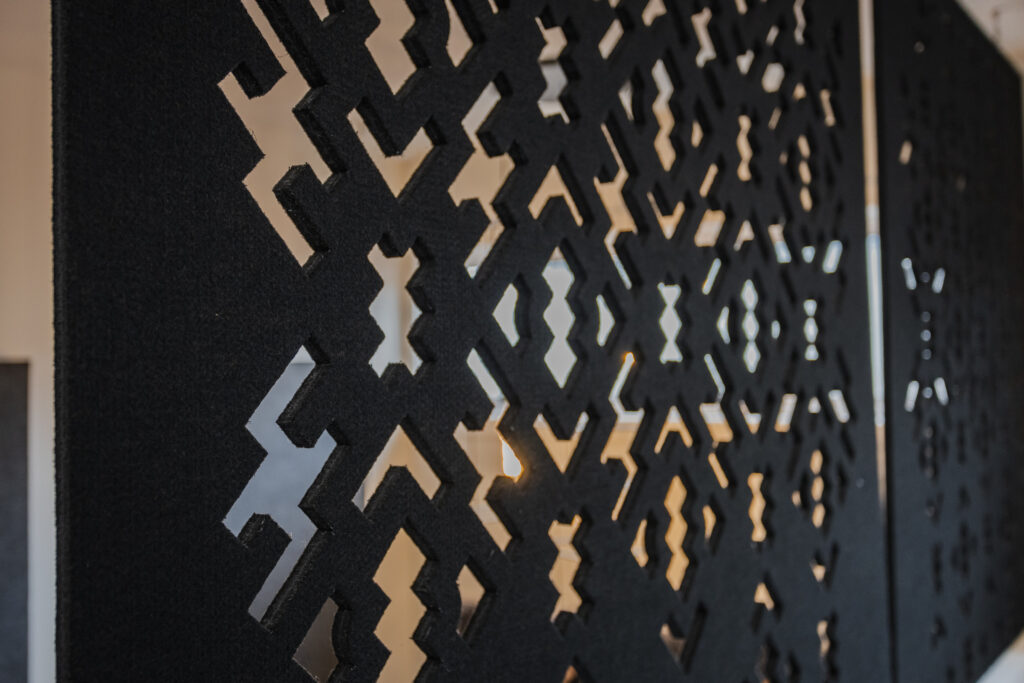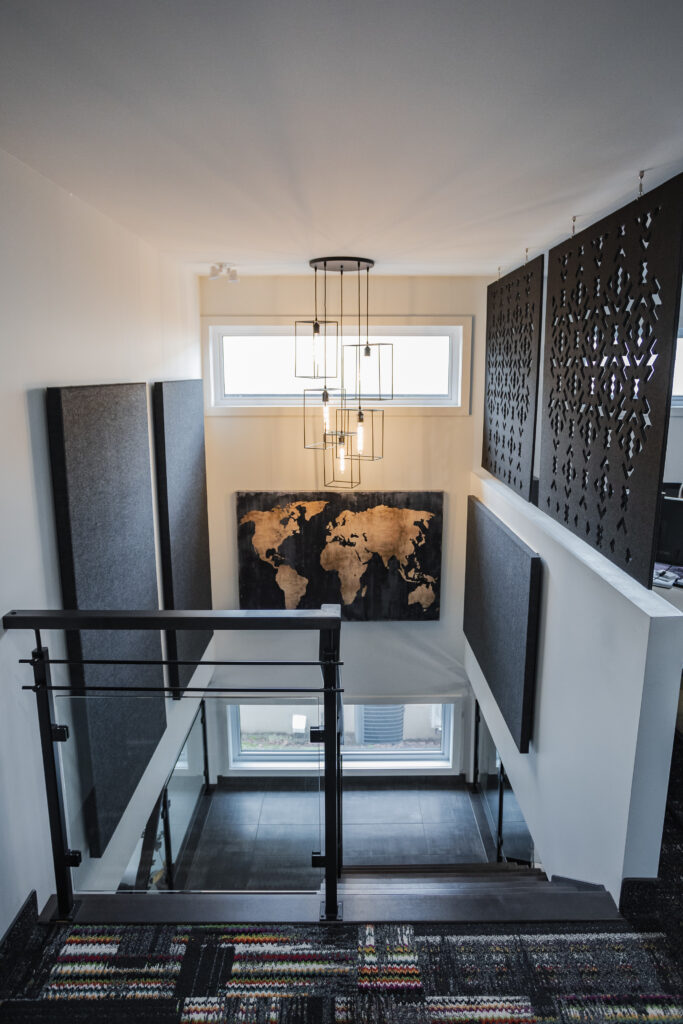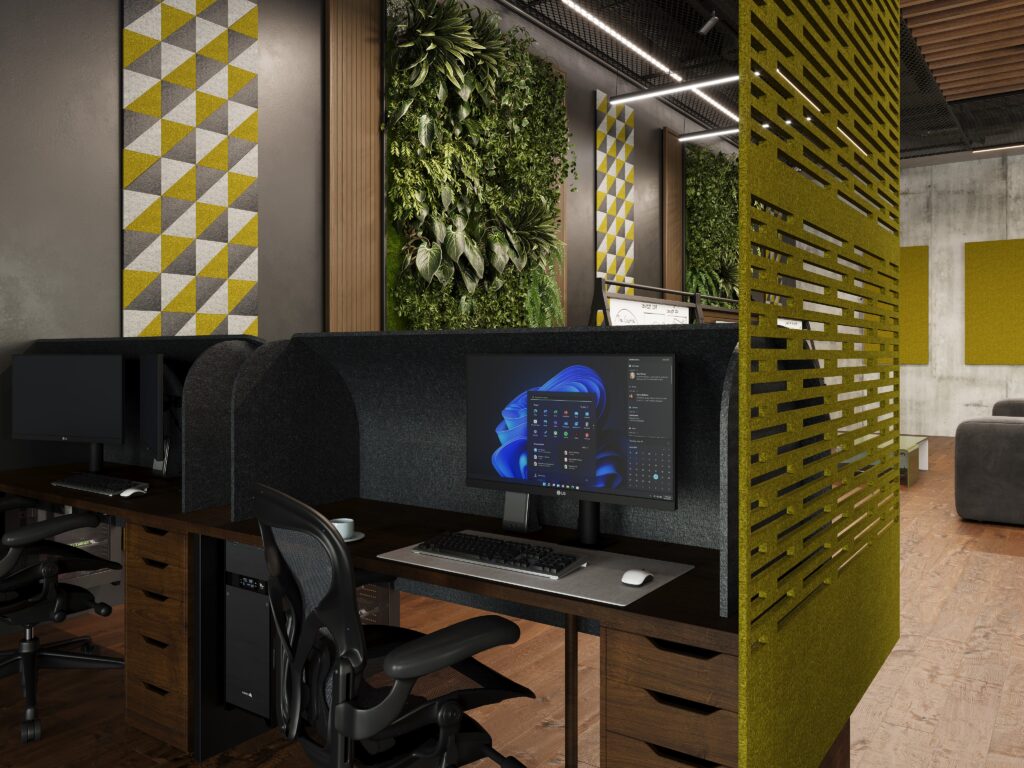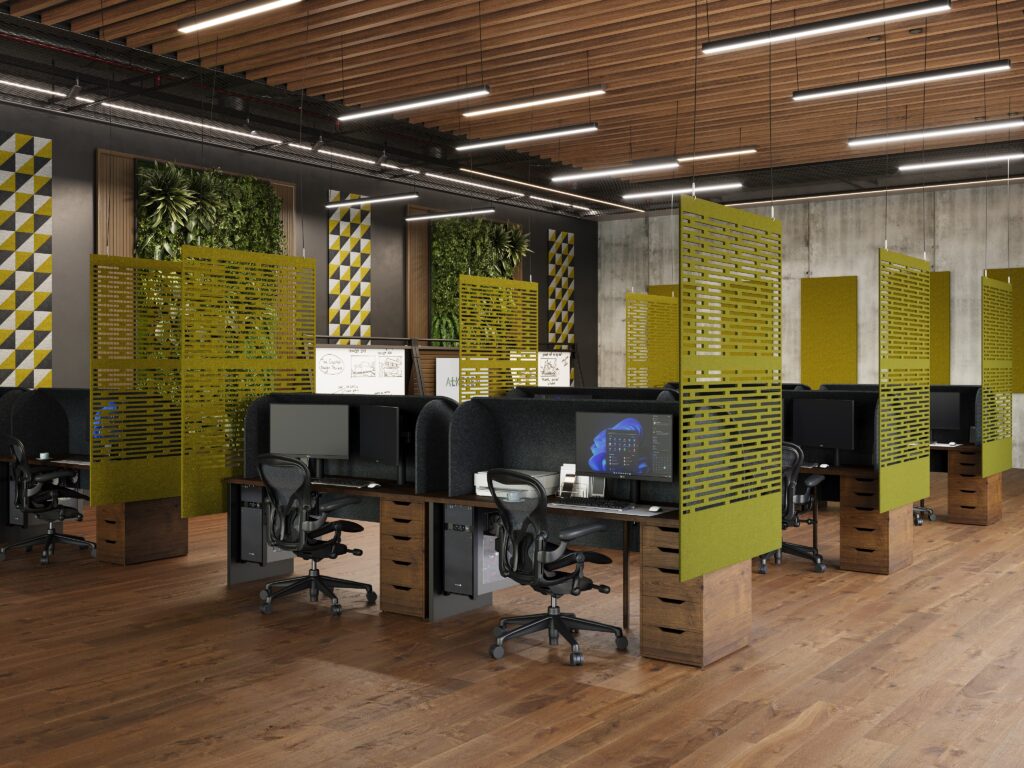

The Renaissance Collection of acoustic hanging screens combines sound performance and architectural design to improve the acoustic comfort of interior spaces. Designed for modern commercial and collaborative environments, these suspended acoustic screens help reduce reverberation, control noise, and create more comfortable spaces for communication and focus.
Ideal for open offices, meeting rooms, conference areas, and collaborative spaces, Renaissance acoustic screens contribute to a quieter environment while adding a strong visual design element.
Improve Acoustic Comfort and Privacy
Acoustic hanging screens play an important role in managing sound in large or open environments. By absorbing sound waves and reducing reverberation, they help create spaces that are more comfortable for conversations, presentations, and daily work activities.
Key Benefits
-
Improved speech clarity
-
Reduced background noise and distractions
-
Increased acoustic privacy
-
Enhanced visual design and spatial definition
These suspended acoustic elements offer a cost-effective solution for improving room acoustics without requiring major architectural modifications.
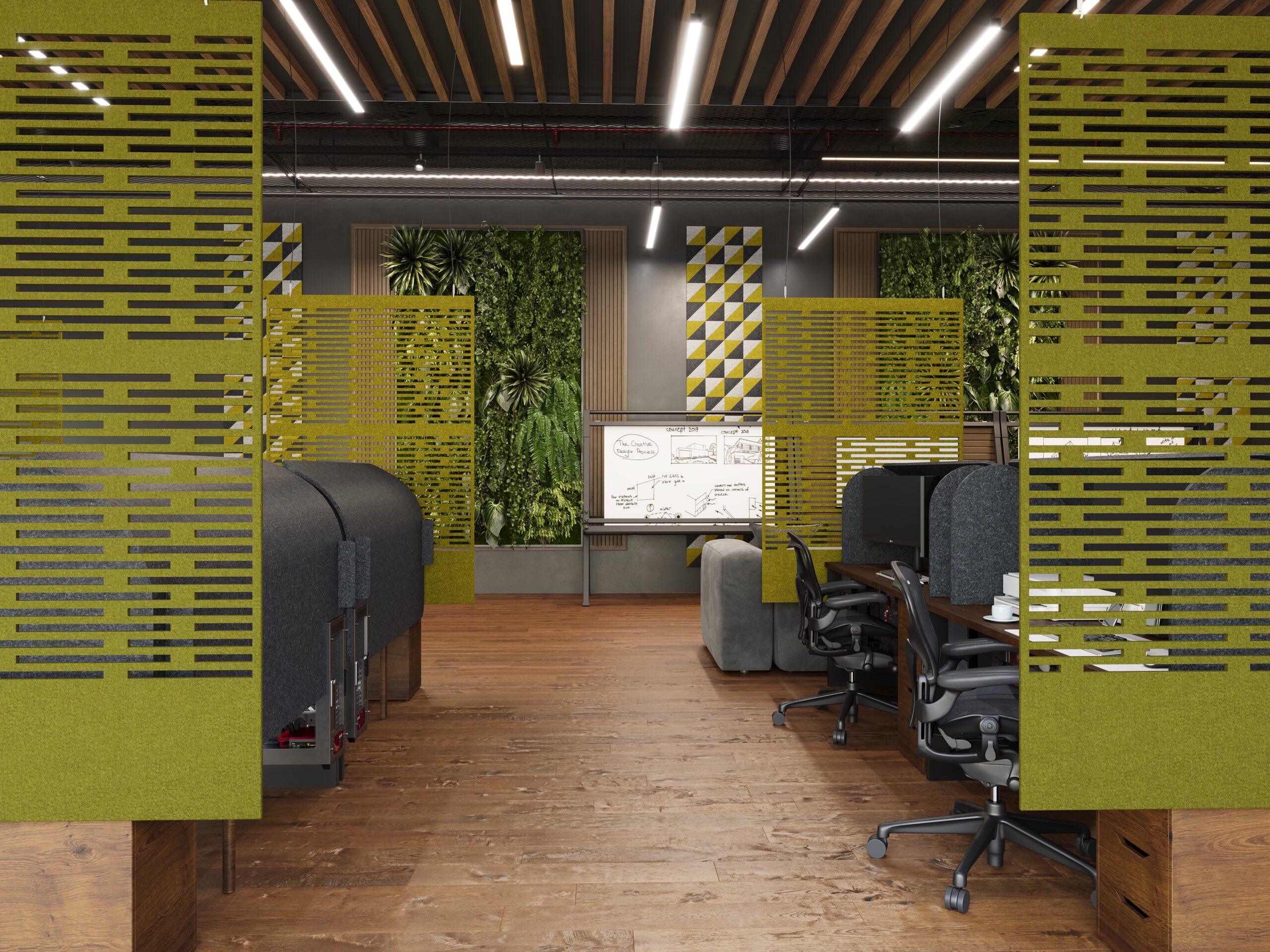
Designed for Flexible Interior Applications
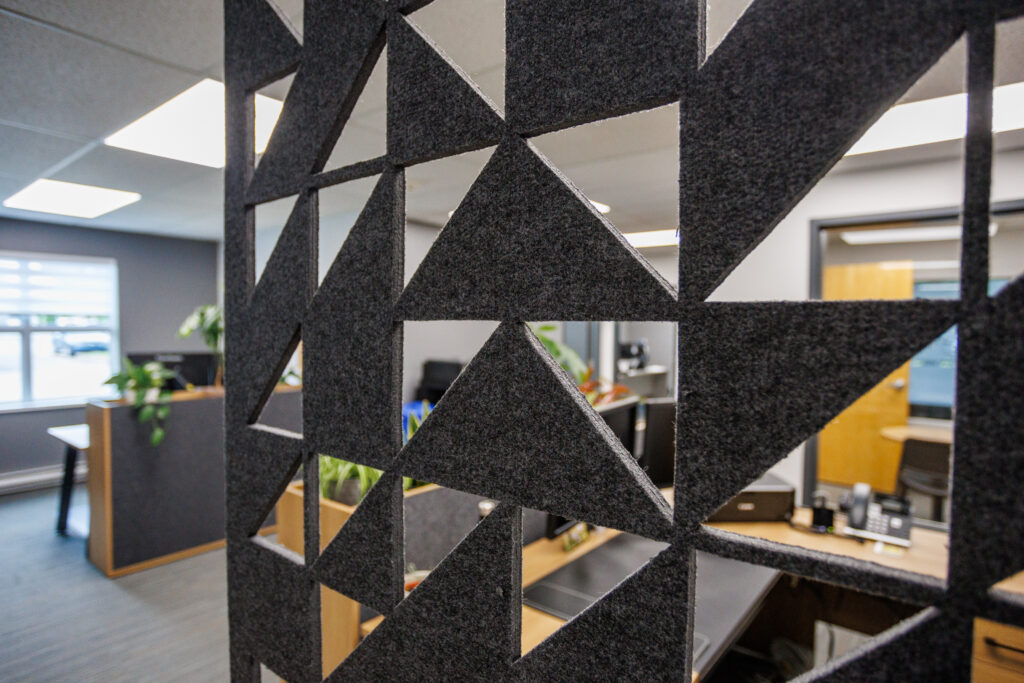
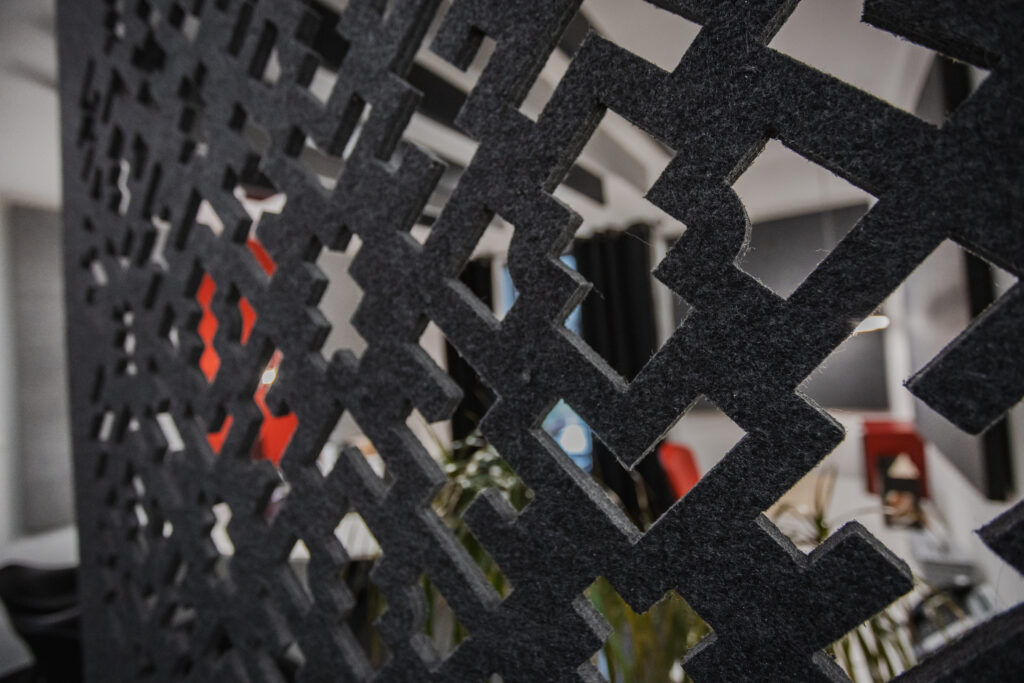
The Renaissance Collection offers six distinctive design patterns and ten felt colors, allowing designers and architects to integrate acoustic performance with interior aesthetics.
Ideal Applications
These acoustic hanging screens are suitable for a wide range of environments:
-
Corporate offices
-
Conference rooms
-
Educational environments
-
Commercial spaces
-
Collaborative work areas
-
Hospitality interiors
The collection makes it easy to select a design that complements the architecture and identity of the space.

Durable PET Felt
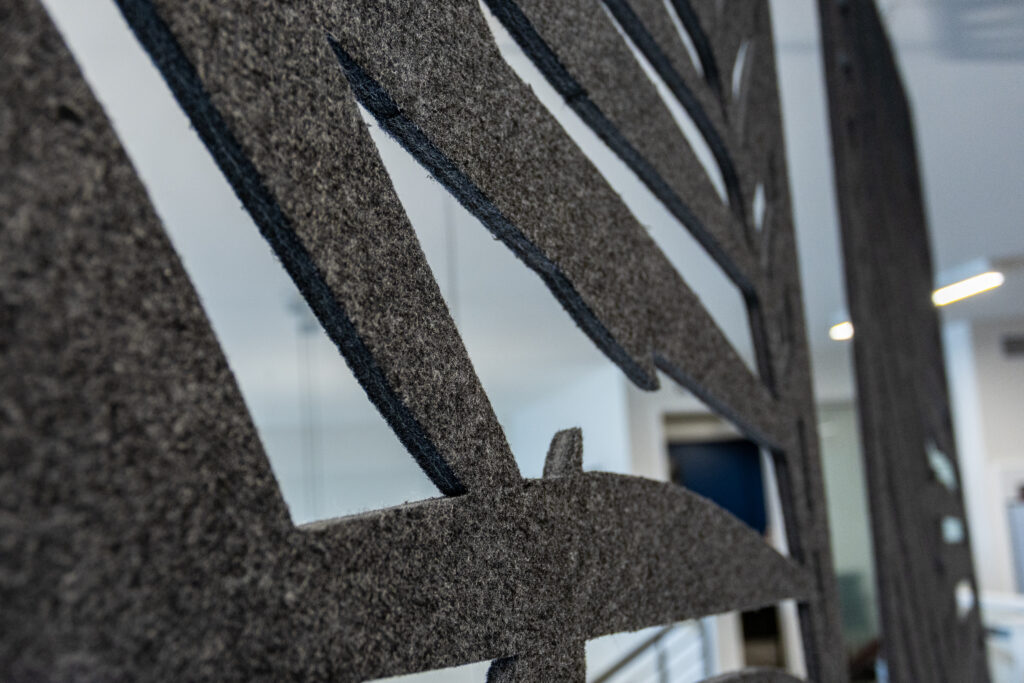
Renaissance acoustic screens are manufactured using Düotex 12 mm PET felt, a durable material engineered for long-term acoustic performance.
Easy Installation and Adaptable Design
The Renaissance acoustic hanging screens are designed for simple installation and flexible configurations. Their suspended format allows designers to easily modify layouts, redefine zones, or update interior aesthetics as project needs evolve.